

Medications such as Ozempic®, Wegovy®, and other GLP-1 receptor agonists can produce meaningful weight loss and important health benefits. Some patients, however, notice that their face appears older, more tired, or less like itself as weight comes off. These changes are not caused by a unique toxic effect of the medication. They primarily reflect loss of facial fat, reduced tissue support, and preexisting age-related changes that become more visible after substantial or rapid weight loss.
The best approach begins with prevention and planning before or early in the weight-loss journey. If facial changes do occur, treatment should then be individualized and staged according to the patient’s anatomy, skin quality, degree of volume loss, and weight stability.
1. Can facial aging during GLP-1–associated weight loss be prevented?
It cannot always be prevented completely. Facial fat loss is influenced by age, genetics, baseline facial volume, skin elasticity, the amount of weight lost, and the speed of weight loss. There is also no proven way to make the body lose fat everywhere except the face. Nevertheless, thoughtful planning may reduce avoidable contributors, protect skin quality, and allow changes to be recognized and addressed early. Additionally, there may be benefits to a more gradual weight loss.
2. What should patients do before or early in treatment to minimize facial aging?
The first step is to discuss the anticipated pace and amount of weight loss with the clinician prescribing the medication. Weight loss should be medically supervised and appropriate for the patient’s health goals. Faster loss and larger total losses may make facial volume depletion more noticeable, although the response varies considerably among patients.
- Maintain adequate nutrition, particularly sufficient protein and overall calorie quality, with guidance from the prescribing clinician or a registered dietitian.
- Perform regular resistance exercise to help preserve lean body mass during weight loss.
- Avoid smoking and nicotine, which impair skin quality and healing.
- Use daily broad-spectrum sunscreen and avoid excessive ultraviolet exposure.
- Follow a consistent skincare program, commonly including moisturizer and, when appropriate, a retinoid or other evidence-based topical therapy directed by a qualified clinician.
- Document the baseline face with standardized photographs so that changes in volume, skin, and contour can be assessed objectively.
- Seek early evaluation if rapid hollowing, marked laxity, or an increasingly gaunt appearance develops.
Hydration and skin care can improve the appearance and health of the skin, but they cannot replace lost deep facial volume or reliably prevent laxity. Similarly, supplements and unproven regenerative products should not be presented as substitutes for sound nutrition or established treatment.
3. Should preventive fillers or procedures be performed while weight is still changing?
Usually, restraint is best. Small, conservative treatments may be reasonable for selected patients, but aggressively replacing volume during active weight loss can lead to repeated procedures, excessive product, or an unbalanced result as facial anatomy continues to change. The face should be reassessed periodically, and definitive correction is generally planned once the patient is near the goal weight and the trajectory is predictable.
Energy-based skin-tightening devices are sometimes promoted as preventive treatment. In my experience, their effect is limited and often overstated, particularly in patients with thin, inelastic skin or substantial tissue laxity. They should be recommended selectively, with realistic expectations and an understanding that they do not replace lost volume or surgically reposition descended tissues.
4. When should facial changes be treated?
Timing depends on the treatment. Skin care and healthy lifestyle measures can begin at any point. Limited nonsurgical correction may be considered when weight loss has slowed and the anatomy is sufficiently predictable. For fat grafting or surgery, patients should generally be at or near their goal and maintain a stable weight for at least six months. Continued weight loss after treatment may create additional volume loss, laxity, and changes in the result.
5. What is the treatment approach once facial aging has occurred?
Treatment should address the specific problem rather than the label “Ozempic Face.” A staged plan may include:
Stage 1: Skin quality and early change
For mild textural change or early laxity, treatment may focus on sun protection, prescription or medical-grade skin care, and selected resurfacing procedures. These measures can improve skin quality but will not restore meaningful deep volume or correct substantial sagging.
Stage 2: Predominant volume loss
Conservative hyaluronic acid dermal fillers can restore volume in selected areas such as the cheeks or temples and soften folds. The objective is structural balance, not simply filling every hollow. Overfilling a thin or lax face can look unnatural and may make the tissues appear heavier.
Fat grafting is another option for appropriate, weight-stable patients. A patient’s own fat is harvested from another area and placed strategically to restore facial volume. It may provide longer-lasting, natural-feeling improvement, although fat survival varies and additional treatment may occasionally be needed.
Stage 3: Significant skin laxity or tissue descent
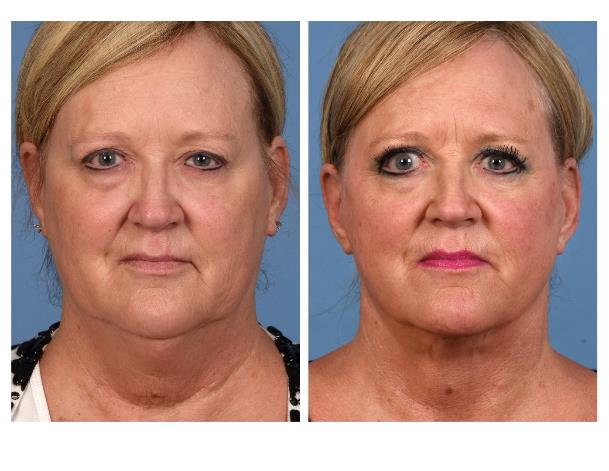
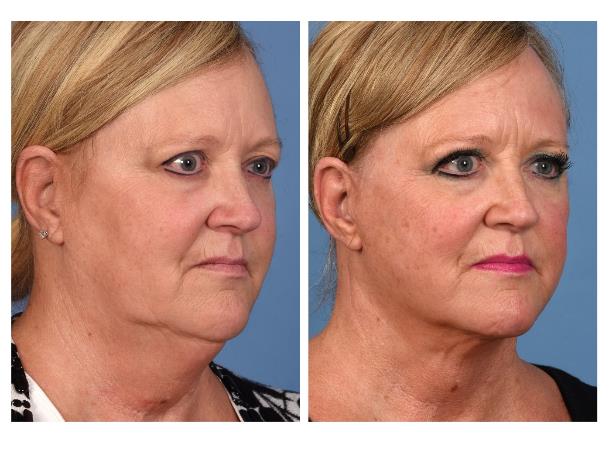
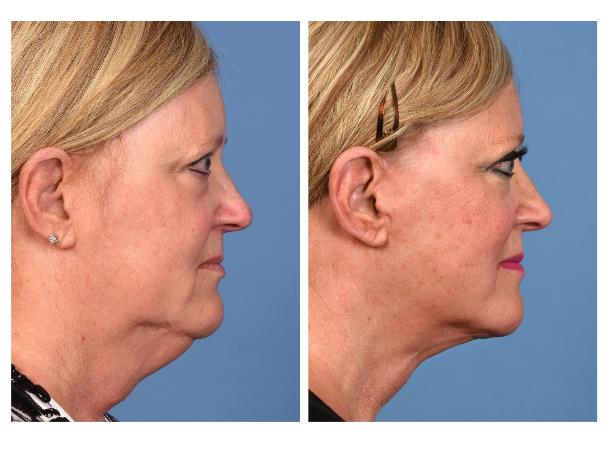
When excess skin, jowling, cheek descent, or neck laxity is the dominant problem, fillers and devices alone are unlikely to provide an adequate or durable correction. A facelift and neck lift can reposition deeper tissues, redefine the jawline and neck, and remove excess skin. Modern techniques are designed to restore natural contours without creating an overdone appearance.
Stage 4: Combined volume loss and laxity
Many patients require a combined approach. Surgical lifting corrects tissue descent and excess skin, while selective fat grafting or limited filler restores volume where it has been lost. Treating both components often produces a more balanced result than relying on either volume replacement or lifting alone.
6. What is the most important takeaway?
Prevention begins with a medically appropriate weight-loss plan, preservation of overall health and lean body mass, protection of skin quality, and early observation—not with indiscriminate procedures. Once weight is stable, treatment should progress from the least invasive effective option to surgery when laxity and tissue descent require it. The goal is not to reverse the health benefits of weight loss, but to help the face look as healthy, rested, and vibrant as the patient feels.
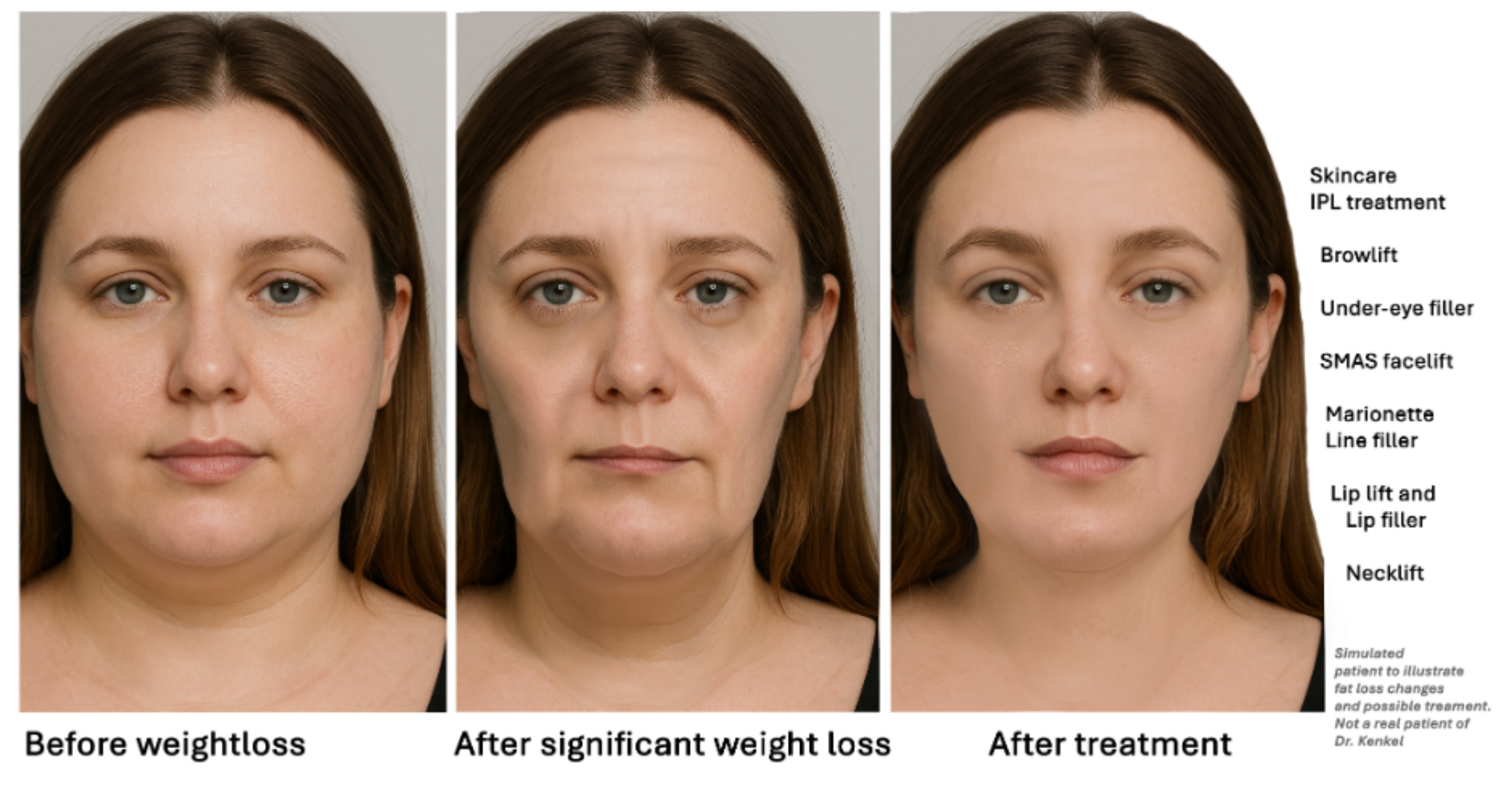
The following photos show the patient before and six months after a lower facelift following a 50-pound weight loss.
Take the Next Step
If you’re concerned about facial volume loss, skin laxity, or other changes during or after GLP-1 weight loss, an individualized evaluation can help determine which options are appropriate for you and when to consider treatment.
I invite you to request a consultation using the online form, or call my office at (214) 645-3112 to schedule an appointment to discuss your concerns and develop a plan based on your anatomy, goals, and stage of weight loss.
Leave a Reply