
Aging in the lower face and neck is often one of the earliest—and most frustrating—areas patients notice. Patients note disharmony early in the aging process, which frequently continues until later in life. Loss of jawline definition, jowling, excess skin, and neck banding can create a disconnect between how you feel and how you look. A lower facelift combined with a neck lift remains one of the most effective and enduring solutions to restore a youthful, natural appearance.
Understanding the Lower Facelift and Neck Lift
A lower facelift focuses on rejuvenating the lower third of the face—particularly the jawline, jowls, and neck. It addresses sagging skin, soft tissue descent, and deep folds, restoring a more defined and youthful contour. It will improve the downturning of the corners of the mouth, but it will not completely resolve it.
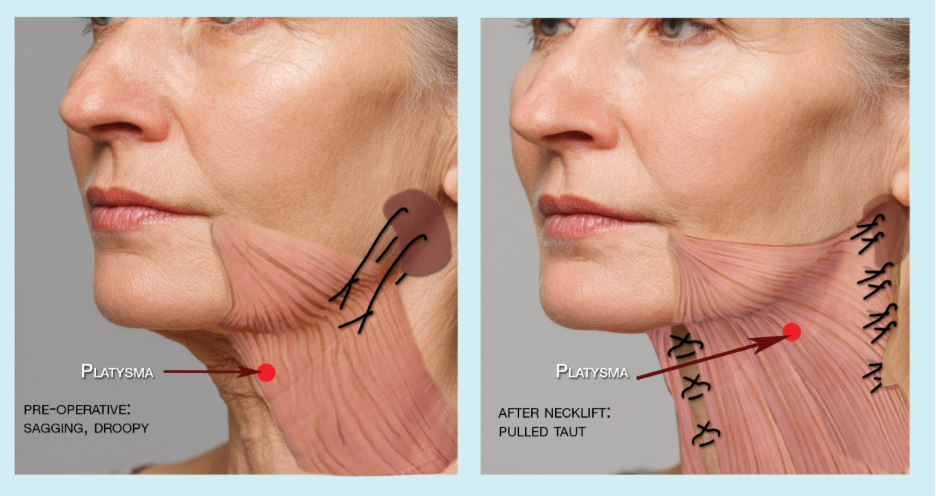
An isolated neck lift, or platysmaplasty, targets the area beneath the chin and along the neck. It improves loose skin, excess fat, and vertical banding caused by the separation of the platysma muscle. It is typically performed in younger patients who do not have considerable facial aging.
While these procedures can be performed independently, they are often combined. The reason is anatomical: the face and neck function as a continuous unit. Treating one area without the other can lead to imbalance.
Combining the Jawline With the Neck
Combining both procedures offers:
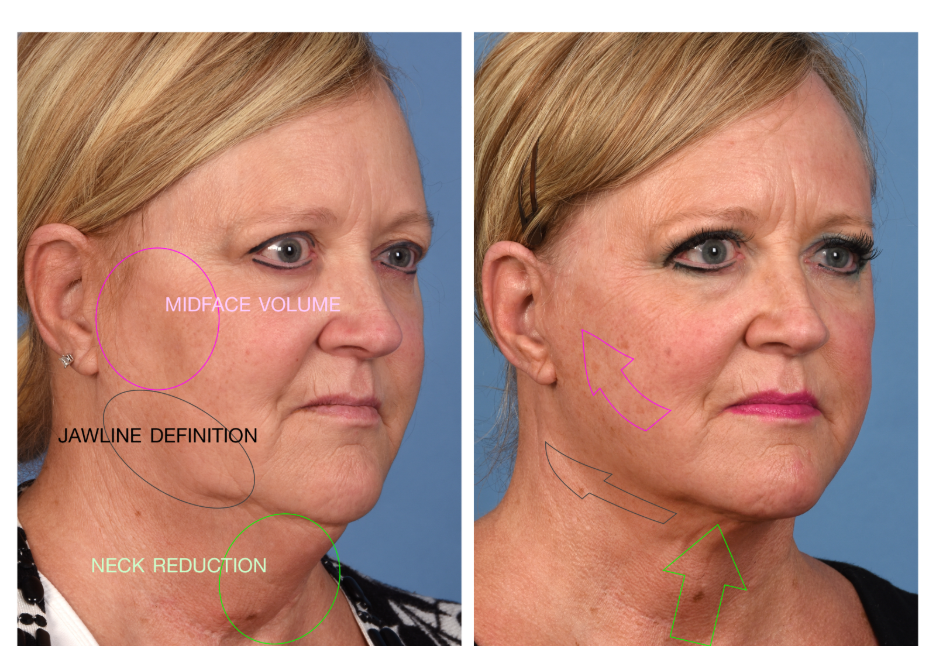
- Seamless contour from cheek to collarbone
- Improved jawline definition
- Correction of both skin and deeper structural aging
- More natural, long-lasting results
In many patients, particularly those with moderate to advanced aging, a combined approach is considered the gold standard.
Surgical Techniques: Then vs. Now
Traditional techniques often focused on tightening the skin alone. While this provided short-term improvement, it sometimes resulted in an over-pulled or “operated on” appearance.
Today’s techniques—commonly utilized by experienced surgeons—focus on repositioning deeper tissue layers such as the SMAS (superficial musculoaponeurotic system) and platysma muscle.
Key modern advancements include:
- Deep plane or SMAS-based lifting for structural repositioning and longevity
- Platysma muscle tightening to eliminate neck bands (both in the center and laterally)
- Fat sculpting or liposuction to refine the jawline
- Conservative skin redraping to maintain natural expression, shape and contour
This evolution allows results that look less “tight” and more authentically youthful.
Who Is a Good Candidate?
Ideal candidates for a lower facelift and neck lift typically:
- Have jowling or loss of jawline definition
- Notice loose skin or fullness under the chin (fat or skin)
- Have platysmal banding (vertical neck cords)
- Are in good overall health
- Have realistic expectations
Importantly, younger patients with isolated neck concerns may benefit from a neck lift alone or, in some circumstances, liposuction. More comprehensive aging changes often warrant a combined procedure. This allows for a tailored surgical plan rather than a one-size-fits-all approach can learn more about combining facial rejuvenation procedures in our related blog post.


The Consultation Process
A personalized consultation is essential. At Dr. Kenkel’s practice, he evaluates the patient’s:
- Facial and neck anatomy
- Skin quality and elasticity
- Fat distribution
- Underlying muscle structure
- Patient goals and expectations
This allows for a tailored surgical plan rather than a one-size-fits-all approach.
Preparing for Surgery
Preparation plays a critical role in safety and outcomes. Our team typically advises patients to take the following steps before surgery:
- Avoid medications and supplements that increase bleeding
- Stop smoking well in advance of surgery
- Maintain good overall health
- Arrange for postoperative care and assistance
Preoperative planning ensures optimal healing and reduces complications.
Recovery and Downtime
Recovery varies depending on the extent of surgery, but most patients can expect:
- Initial swelling and mild bruising up to the first week
- Return to social activities in approximately 1 to 2 weeks
- Gradual refinement of results over several months
Patients often describe a feeling of tightness early on, which softens as healing progresses.
Adhering to postoperative instructions—such as head elevation and activity restrictions—is essential for optimal results.
Results: What To Expect
A well-executed lower facelift and neck lift should not make you look like a different person—it should make you look like a more youthful version of yourself.
Expected outcomes include:
- Sharper jawline definition
- Smoother neck contour
- Reduction in jowls and folds
- Improved overall facial balance
Results are long-lasting, often enduring for many years, though they do not stop the natural aging process.


New Trends in Facial Rejuvenation
The field continues to evolve, and several newer concepts are shaping patient expectations:
1. “Subtle” Aesthetic Results
Patients increasingly seek refined improvements that avoid obvious signs of surgery. The goal is enhancement, not transformation.
2. Combination Treatments
Surgical procedures are often paired with:
- Fat grafting for volume restoration
- Laser resurfacing for skin quality
- Neuromodulators and fillers for maintenance
3. Earlier Intervention
Rather than waiting for advanced aging, many patients are opting for procedures earlier, when changes are more subtle and easier to correct.
4. Minimally Invasive Adjuncts
While surgery remains the gold standard for significant laxity, non-surgical treatments can complement and extend results. Their limits should be discussed and understood.


Risks and Considerations
As with any surgery, there are risks, including:
- Bleeding or infection
- Nerve injury (rare)
- Scarring
- Prolonged swelling
- Poor healing
Choosing an experienced, board-certified plastic surgeon, specializing in facial surgery, like Dr. Kenkel, significantly minimizes these risks.
Final Thoughts
A lower facelift (combined with a neck lift) remains one of the most powerful tools in aesthetic surgery. When performed with modern techniques and a thoughtful, individualized approach, it can deliver natural-looking, long-lasting rejuvenation.
For patients seeking to restore definition, improve contour, and achieve a refreshed appearance without looking overdone, this combination procedure continues to set the standard in facial aesthetics. If you’re considering facial rejuvenation, use our online form to request a consultation or call us at (214) 645-3112 to schedule an appointment.
Leave a Reply